
Why Campus Venues Are the Perfect Home for a Pizza Vending Machine
Think about the last time a campus dining hall closed at 9pm and left an entire residence block hungry. It happens constantly — and it’s exactly the kind of gap a pizza vending machine for campus fills without anyone having to hire extra staff or extend kitchen hours.
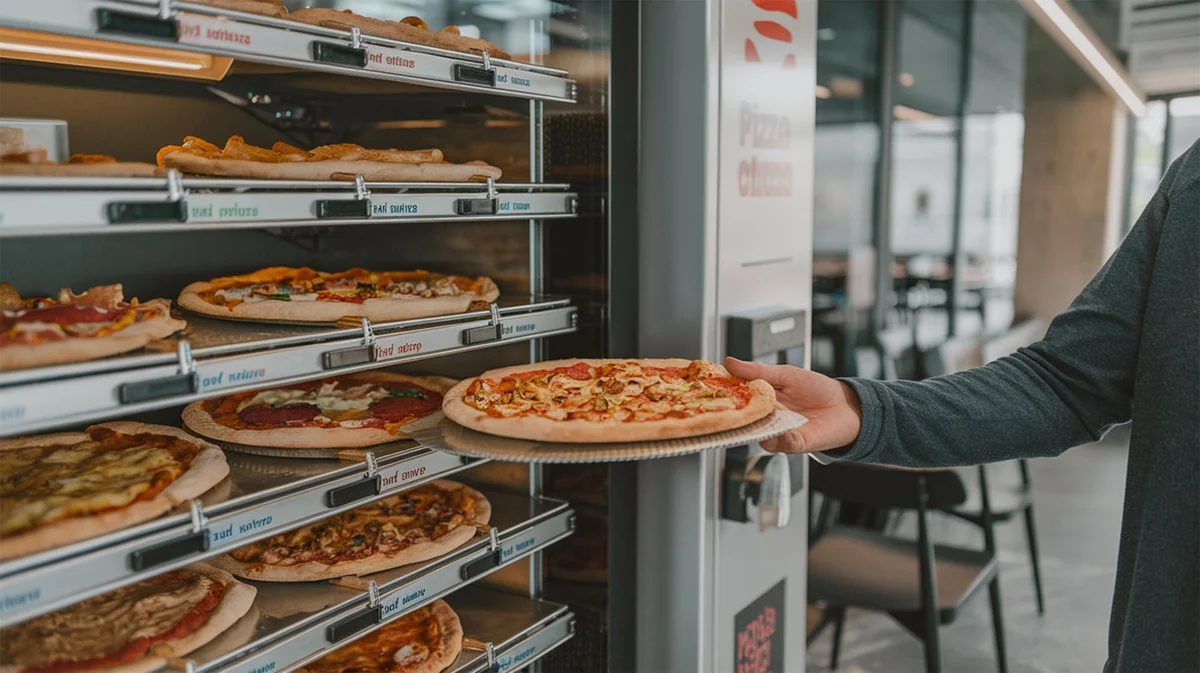
Colleges and universities are genuinely unusual environments when you think about it. You’ve got thousands of people living, studying, and existing in a dense footprint, running on completely unpredictable schedules. A pre-med student pulling an all-nighter at 2am has the same craving as a freshman between back-to-back lectures at noon. Neither of them wants to wait 40 minutes for delivery. Neither of them should have to.
So the foot traffic argument practically makes itself.
But beyond raw numbers, campus venues offer something most commercial locations can’t: a captive, repeat audience. Students walk the same routes every single day — past the student union, through the library atrium, by the gym entrance. A pizza vending machine for campus placed in any of those spots becomes part of the daily routine almost automatically. That’s not luck. That’s geography working in your favor.
There’s also the variety angle worth considering. Modern automated food kiosks — the kind engineered by manufacturers like Caiyunjuan, whose full product range you can browse at www.caiyunjuan.com — aren’t just single-product boxes anymore. The same factory floor that produces a fully automatic cotton candy vending machine also builds fresh pizza baking kiosks designed with food-safe automatic sealing machine technology, so every order comes out hot, intact, and tamper-evident. That matters a lot in a shared public space where hygiene is scrutinized.
Campus operators specifically benefit from a few structural realities:
- Extended demand windows — appetite doesn’t follow a 9-to-5 schedule on campus
- Lower vandalism risk compared to street-level public installations (most venues have security cameras and ID-gated access)
- Built-in marketing through student social media — a novel food machine gets photographed and shared, full stop
- Seasonal predictability, which makes inventory planning far easier than in unpredictable retail environments
Honestly, it’s one of the cleaner business cases in automated retail right now. The demand is real, the location logic is sound, and the infrastructure — foot traffic, power access, enclosed spaces — is already there waiting to be used.
What Makes a Pizza Vending Machine Actually Work on a College Campus
Speed matters more than almost anything else. A student between lectures has maybe four minutes — realistically, probably less — and if the machine fumbles that window, they’re gone and they’re not coming back.
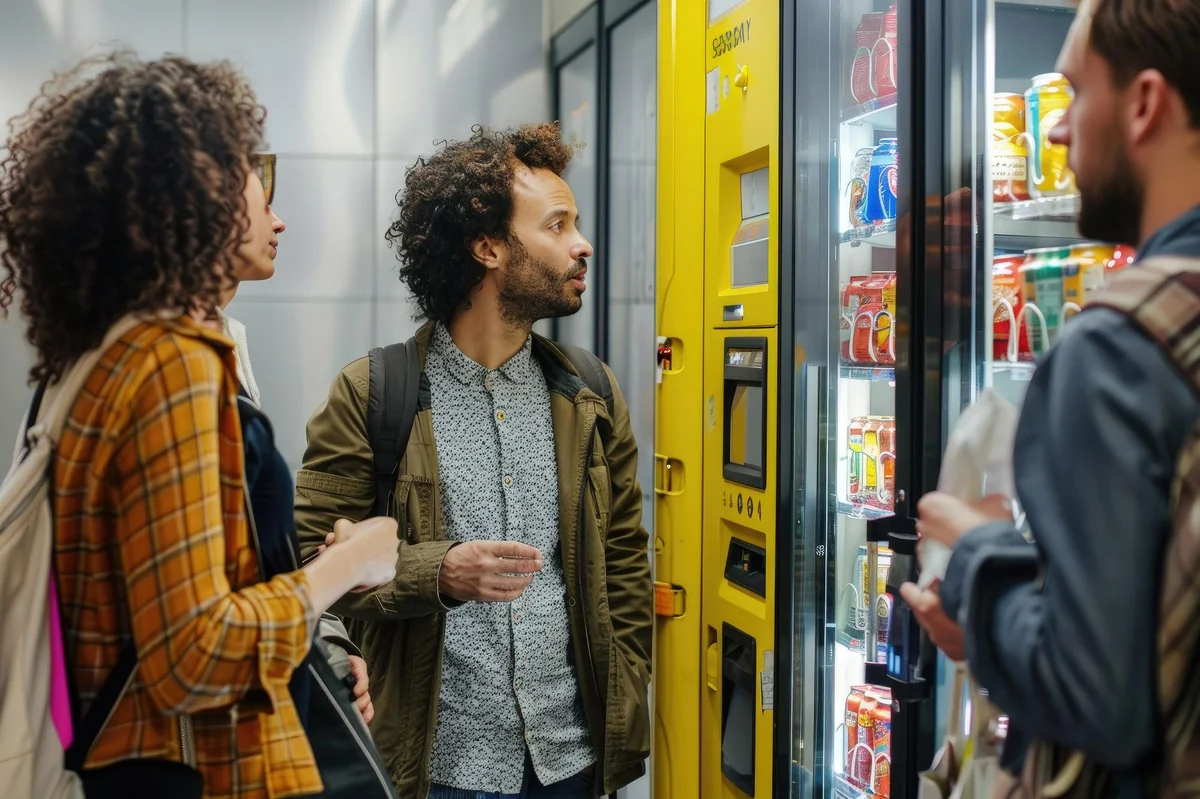
So what actually separates a pizza vending machine for campus that thrives from one that collects dust next to the sad sad salad station? A few non-negotiable things. First, bake time has to be fast. The better automated pizza kiosks on the market right now can go from frozen to finished in under three minutes, which is genuinely competitive with a microwave and dramatically better than waiting in a dining hall line. Second — and this one gets overlooked — the machine needs a reliable sealing mechanism. A pizza vending machine for campus that delivers a soggy, half-open box is a PR disaster in the age of student Twitter (or whatever we’re calling it this month). Machines built with an automatic sealing machine component handle this cleanly, keeping the box intact and the crust from steaming itself into mush during handoff.
Thermal consistency is the other big one. Campus buildings are not climate-controlled utopias. A machine sitting near a gym entrance or in an open atrium is dealing with temperature swings, humidity, and probably the occasional door draft. The internal heating chamber needs to compensate for all of that without the operator babysitting it.
Operators researching this category seriously tend to end up at manufacturers like Caiyunjuan, which builds automated food kiosks — including pizza baking units — with that kind of operational durability baked into the design. (Worth noting: their product documentation and specs are publicly accessible at www.caiyunjuan.com, which is more transparent than a lot of competitors who make you jump through hoops for basic technical info.)
And don’t underestimate software. Real-time inventory alerts, remote diagnostics, cashless payment — these aren’t luxury features on a college campus. They’re baseline. A machine that goes out of stock at 11pm on a Thursday and nobody finds out until Monday morning is just a very expensive box taking up floor space.
How Caiyunjuan’s Fresh Pizza Baking Kiosk Holds Up in High-Traffic Campus Settings
Campus environments are genuinely brutal on machines. We’re talking about foot traffic that spikes hard during class breaks, students who aren’t exactly gentle with touchscreens, and venues that can’t afford a maintenance call every other week. So when evaluating a pizza vending machine for campus deployment, the stress-test question isn’t “does it work?” — it’s “does it keep working at 11:45pm when the dining hall is closed and there’s a line forming?”

Caiyunjuan’s fresh pizza baking kiosk is built around that exact pressure point. The unit handles the full cycle autonomously — dough, sauce, toppings, bake — without needing staff intervention between orders. And the construction reflects a manufacturer that’s been doing this since 2017, not a startup that bolted a heating element onto a snack dispenser. The sealing mechanism in particular (Caiyunjuan uses an automatic sealing machine design for packaging consistency) is one of those details that actually matters at volume, because a poorly sealed pizza box at 200 units a week is a hygiene complaint waiting to happen.
Durability specs matter too. ISO-certified manufacturing, CE compliance, FDA-compliant food contact materials — these aren’t just checkboxes. On a university campus, food service equipment goes through procurement scrutiny and facilities reviews. Having that documentation ready is the difference between getting approved and getting stuck in committee for six months. (Full product specs and certifications are publicly listed at www.caiyunjuan.com, which genuinely saves time during that approval process.)
The software side holds up as well. Remote inventory monitoring, real-time alerts, cashless payment — all standard. Operators managing multiple machines across a campus can actually see what’s happening without physically being there. That’s the same operational logic Caiyunjuan applies across their other automated food kiosks, including their fully automatic cotton candy vending machine line, where unattended reliability is the whole point.
Honestly, the pizza vending machine for campus use only works as a business if it runs consistently without babysitting. Not occasionally. Consistently. That’s what separates a machine worth installing from one that becomes a very photogenic piece of lobby furniture.
Picking the Right Spot and Setup So Your Campus Pizza Vending Machine Earns Its Keep
Location is everything. Seriously — a pizza vending machine for campus that lands in the wrong corridor will underperform even if the pizza is genuinely good, the interface is slick, and the pricing is fair. Placement isn’t an afterthought. It’s the whole game.
High foot traffic at odd hours is what you’re hunting for. Think 24-hour study halls, late-night dormitory lobbies, transit hubs near campus shuttles, or anywhere students reliably show up hungry between 10pm and 2am when the dining hall is very much closed. A spot that pulls 400 to 600 daily passersby during peak academic weeks is a reasonable baseline to aim for before committing to an install.
Beyond traffic, the physical setup matters more than most operators expect. The machine needs a dedicated 220V power supply — don’t assume a standard outlet will cut it — and the floor space requirement typically runs around 1.2 to 1.5 square meters including service clearance. And ventilation is non-negotiable. These are active baking units, not passive dispensers. Heat management affects both food quality and the machine’s long-term reliability, which is exactly the kind of detail Caiyunjuan engineers into their fresh food kiosk lineup from the factory level up.
- Prioritize 24/7 accessible zones over high-traffic spots that lock down at 8pm
- Confirm power supply specs before signing any venue agreement
- Check whether the location allows for an automatic sealing machine integration if you’re planning hygienic packaging add-ons
- Avoid narrow corridors — service access for restocking needs to be practical, not an obstacle course
- Campus venues with existing vending infrastructure (Wi-Fi, power, drainage) are dramatically easier to work with
The operational details for Caiyunjuan’s pizza kiosk line — including floor plan specs and power requirements — are documented at www.caiyunjuan.com. (Worth bookmarking early, before the venue negotiation gets serious.)
So the short version: a pizza vending machine for campus earns its keep when it’s placed where hungry people already congregate late at night, set up with proper infrastructure, and positioned for easy restocking. Get those three right, and the machine does the rest.
Conclusion
A pizza vending machine for campus isn’t a novelty play — it’s an infrastructure decision, and the location either makes it or quietly kills it.
If there’s one thing worth obsessing over before anything else, it’s foot traffic after 9pm. Not average daily traffic. Not peak lunch counts. Late-night, hungry, nowhere-else-to-go traffic. That’s your real customer base, and if the machine isn’t sitting right in the middle of it, the numbers won’t work — no matter how good the pizza is.
Get the placement right, confirm the power and access specs upfront, and the rest tends to sort itself out. That’s the whole game.
Frequently Asked Questions
Q: How much does a pizza vending machine for campus actually cost to install?
A: The machine itself typically runs anywhere from $15,000 to $35,000 depending on the model and whether you’re buying outright or leasing — and that’s before you factor in electrical hookups, which can add another $500 to $2,000 if the location needs dedicated wiring. Some manufacturers, like Caiyunjuan, offer OEM configurations that bundle software and branding into the unit price, which can make the total easier to budget. Don’t forget ongoing costs: ingredient restocking, routine maintenance, and any revenue-share agreements with the campus facilities team.
Q: How long does it take a pizza vending machine to actually cook a pizza?
A: Most automated fresh-bake pizza kiosks deliver a finished pizza in 3 to 5 minutes — from order to pick-up. That’s not reheated frozen pizza either; machines that use real baking chambers with infrared or convection heating are producing something genuinely hot and fresh. For a hungry student at midnight, that wait is nothing.
Q: Where’s the best spot to place a pizza vending machine for campus?
A: Late-night foot traffic is the single biggest factor — a residence hall lobby, a 24-hour library entrance, or a student union that stays open past 10pm will consistently outperform a cafeteria spot that dies after dinner. You want a location where students already congregate when other food options are closed, not just where foot traffic peaks at noon. If you can find a spot with a 208V or 240V outlet already nearby, even better — that cuts your setup cost significantly.
Q: Is a pizza vending machine for campus worth it as a business investment?
A: It depends almost entirely on placement and volume — a well-positioned machine in a high-traffic dorm area can move 50 to 100+ units a week at $8 to $12 per pizza, which adds up fast. The margin on automated food machines tends to be solid because labor cost is essentially zero once the machine is running. The risk isn’t the machine; it’s signing a placement agreement for a dead corner and wondering why nobody’s buying.
Q: Can a pizza vending machine for campus handle dietary restrictions like gluten-free or vegan options?
A: Some machines do — but it’s not a given, so ask specifically before you commit to a unit. Higher-end kiosk models allow operators to swap ingredient cassettes or configure multiple topping profiles through the backend software, which means gluten-free crusts or dairy-free cheese can technically be an option. That said, cross-contamination is a real concern in automated systems, so be careful about marketing it as “safe for allergies” without checking the machine’s actual separation specs.
Q: What maintenance does a campus pizza vending machine require?
A: Plan on restocking ingredients every 2 to 4 days depending on volume, plus a weekly cleaning cycle for the baking chamber and dispensing components. Most modern machines will flag low-stock alerts and error codes through a remote dashboard — so you’re not flying blind between visits. A decent manufacturer will include at least a 1-year warranty and remote tech support, which matters a lot when something goes sideways at 2am on a Friday.
Q: Why do some pizza vending machines on campuses fail to get traction?
A: Bad placement is the killer — almost every underperforming machine story traces back to a location chosen for convenience of the operator, not proximity to actual student hunger patterns. A machine tucked near an administrative building that empties at 5pm is basically invisible to its target customer. The pizza vending machine for campus model works when it’s treated like infrastructure, not a novelty; put it where people are already standing around hungry, and the traction comes naturally.
Q: How do students actually pay at a pizza vending machine on campus?
A: Most current models accept credit and debit cards, contactless payments (Apple Pay, Google Pay), and QR code scanning — cash-only machines are pretty much a dealbreaker for college students at this point. Some campus deployments also integrate with the university’s meal plan system, which is a huge plus for adoption since students can spend dining dollars they’ve already paid for. If your target machine doesn’t support campus card integration, it’s worth asking the manufacturer whether that’s an available software add-on.