
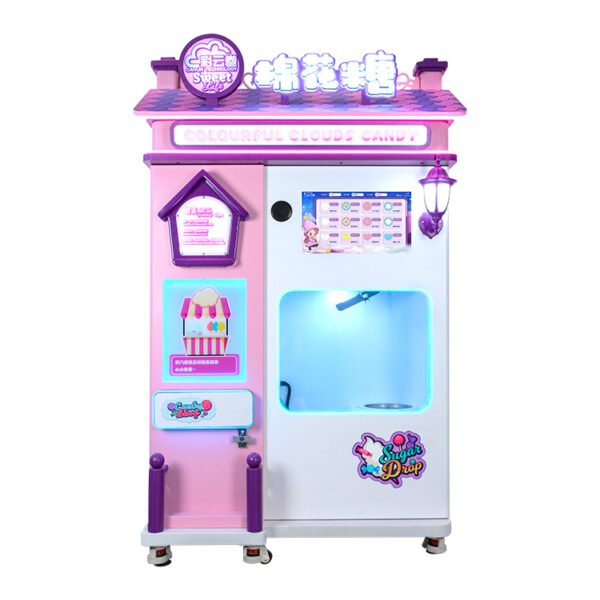
In recent years, cotton candy vending machines have been gaining popularity in Europe and North America and becoming quite common in places with high volumes of tourists, such as tourist sites or entertainment venues. In the context of searching for scalable solutions with minimal staff participation, the question of the cotton candy vending machine business potential is of crucial importance to many investors and operators involved in vending businesses. On the other hand, there is also much attention paid to the analysis of the cotton candy vending machine cost in the context of its impact on business performance.
This paper will analyze the return on investment that can be achieved when running cotton candy vending machines in Europe and North America by considering the revenue structure, operational costs, factors influencing profitability and scalability of the system.
Understanding Cotton Candy Vending Machine Profit Models in Europe and North America
Prior to a regional analysis, it will be essential to understand how cotton candy vending machines generate profits in practice. Cotton candy vending machines operate based on the principle of selling products at impulse purchase moments, attracting customers with high visual appeal, converting sugar into highly profitable candy, and relying minimally on any form of labor inputs across both markets.
Revenue Structure and Sales Behavior
In both Europe and North America, the profit generated by cotton candy vending machines depends on the volume of low-cost transactions made during each day. The production of each cotton candy serving costs very little money for these devices, while their prices remain relatively high in relation to their actual production cost due to convenience, entertainment value, and novelty.
The profitability of cotton candy vending machines greatly relies on high footfall rates, presence of trigger mechanisms for purchases, and the overall visibility of such machines. In North America, there is greater emphasis on impulse purchasing behaviors taking place in amusement parks and movie theaters, whereas this trait is less present in Europe.
Seasonal Demand Influence
Seasonal demand has great impact on the profits made by the machines in tourist-oriented and special events-based markets in both continents. During the summer tourism seasons, holidays and vacation breaks in schools cause huge profits as they bring in more customers through the machine.
However, in European markets, profits are still made from seasonality. Nevertheless, profits are more evenly distributed between tourism seasons, cultural events, and weekend leisure than in case of extremes. Operators are known to achieve their highest profits during fairs and events when emotions play greater roles.
Profit Margin Expectations
The typical profit margins made from cotton candy vending machines fall in the ranges of 60 percent to even over 80 percent. Factors such as cost controls of sugar and maintenance, energy costs, and rental costs will determine how high the profit margin goes for the operator.
Operators in North America have an advantage over European operators due to the ability to sell the product at flexible prices, which gives more profitability per sale. European operators tend to make use of effective machine placement and optimization of energy and cost usage as well as long-term lease arrangements.
Breaking Down Cotton Candy Vending Machine Cost in Europe vs North America
Cost structures are some of the major factors that influence ROI results, payback periods, and scaling possibilities. There are notable differences in costs between Europe and North America in regard to regulatory framework, electricity costs, and local retail infrastructure development.
Initial Purchase and Installation Cost
The main components of the initial purchase cost for both locations include the hardware system itself, automatic vending machinery, payments software, and initial installation services. Cotton candy vending machines in North America are more costly because of better payment systems and telemetry services.
On the other hand, in Europe, there may be increased costs in relation to stricter certification standards and additional installation conditions required by law. Yet, the machine can still be considered a moderately expensive acquisition compared to other types of stores.
Operational and Maintenance Cost Differences
Cost elements related to the operation of the cotton candy vending machine include the availability of raw sugar supplies, machine maintenance, electricity consumption, and rentals for locations. In some North American states, savings in electricity cost can assist in reducing operational costs per month.
However, high premiums for rent locations in shopping centers and entertainment areas negate some of this advantage. In Europe, cost elements related to the operation of the cotton candy vending machine include higher cost of energy; however, more stable and reliable leasing terms often benefit business operations.
Hidden Costs and Compliance Factors
Compliance costs are also another important element when considering the total cotton candy vending machine cost. European countries are known to have tougher compliance regulations for hygiene and safety issues, which might lead to more costly inspection and maintenance processes.
In North America, there may not be unified requirements for compliance; however, there may be additional costs related to insurance based on the type of location. This additional cost should be considered when assessing total cotton candy vending machine cost efficiency across regions.
ROI Comparison: Cotton Candy Vending Machine Profit vs Cost Efficiency
While looking at Europe and North America, ROI would always be a result of weighing the profitability of cotton candy vending machines versus their costs in different settings.
North America ROI Performance
The profitability of cotton candy vending machines in North America is usually better when there is a lot of traffic in entertainment areas like theme parks, stadiums, and shopping centers where consumers interact frequently. The operators take advantage of the strong impulse buying environment that leads to a high number of transactions daily.
Nonetheless, the cost of cotton candy vending machines in North America could be relatively high because of stiff competition in location bidding, high rents, and high competition for customers among vending machines.
Europe ROI Performance
The performance of the cotton candy vending machine is somewhat more predictable and less volatile in Europe than in North America in terms of ROI, although the top sales volumes are somewhat lower in comparison with those observed in North America.
The reason for this trend can be considered to be the more predictable and manageable cost structure associated with the operation of such machines, in particular in the context of commercial leasing of vending machine placement locations.
Payback Period Analysis
Typically, the payback period for a cotton candy vending machine varies within the range from 8 to 18 months depending on various factors related to the efficiency of its usage. In North America, the payback period is usually somewhat shorter than in Europe because of the higher sales volume.
However, in Europe, recovery times for cotton candy machines tend to be slightly longer, but more dependable due to predictable customer flow and fewer fluctuations in operation in premium areas.

Market Drivers Affecting Cotton Candy Vending Machine Profit Growth
Apart from the costs involved and the pricing policy, there are certain macroeconomic and behavioral factors that impact the growth of profit from cotton candy vending machines in Europe and North America.
Urbanization and Foot Traffic Density
Urbanization continues to be an important determinant of the profit made from the operation of cotton candy vending machines, especially in urban areas with constant foot traffic. In North American cities with well-developed shopping centers and entertainment quarters, high profits can be earned.
In European cities, where the density of urbanization is higher in tourist sites, the government may have stringent restrictions for placing vending machines in such places.
Consumer Experience Economy
There is a growing consumer experience economy, which greatly contributes to cotton candy vending machine profitability in both markets. Today’s consumers tend to favor interactive, aesthetically pleasing, and immediately rewarding food experiences that are more than just vending.
In this respect, cotton candy vending machine benefits substantially because of its visually pleasing manufacturing process, emotionally appealing, and social media sharing capabilities; thus, improving cotton candy vending machine profitability.
Digital Payment Adoption
Adoption of digital payments is directly related to cotton candy vending machine profitability, since it reduces transaction costs and increases conversion rates. North America is ahead in implementing mobile wallets and contactless payment acceptance into vending machines.
There is a high adoption of digital payments in Europe; however, it varies depending on the country’s infrastructure. Cotton candy vending machines that use digital payment technology earn more profits than machines accepting only cash transactions.
Long-Term ROI Strategy for Cotton Candy Vending Machine Operators
For operators of cotton candy vending machines to optimize their cotton candy vending machine profit, it is necessary to devise an appropriate strategy that is focused on the long-term gains while taking into consideration regional differences and the patterns of behavior among consumers.
Location Optimization Strategy
The most important variable in optimizing cotton candy vending machine profit is location. Areas with high foot traffic like amusement parks, train stations, and shopping malls have proven to be far superior to other locations.
The selection of strategic locations ensures that the payback period is reduced, enhancing the efficiency of the cotton candy vending machine.
Cost Efficiency and Maintenance Planning
The need for reducing future cotton candy vending machines costs necessitates the need for proper scheduling of maintenance services, efficient sourcing of ingredients, and energy efficiency of operation.
Ultimately, such efficiencies increase the net profit margins of the cotton candy vending machine operations, especially in instances where there are multiple machines involved.
Scaling and Multi-Machine Deployment
When scaling cotton candy vending machines profit systems, there are instances where multiple cotton candy vending machines will be deployed to cover more than one location. The practice proves effective when carried out both in Europe and North America.
Using several vending machines enables a more flexible negotiating position in terms of costs associated with them.
Conclusion
Comparison between Europe and North America reveals that the profitability of cotton candy vending machines is high and ever-evolving in both regions despite their differences in consumer behavior, regulations, and costs. Although North America has a fast revenue growth and higher peak profits, Europe gives more consistent long-term profitability due to its managed and forecastable costs related to cotton candy vending machines.
It is crucial to comprehend these dynamics to develop a profitable unattended retail strategy. In case you want to invest in vending machines as a business opportunity, you should find a proper balance between cotton candy vending machine profitability and cost management. If you want to explore detailed machine specifications, ROI calculators, and deployment solutions, you can visit Vending Machine Manufacturer | Caiyunjuan.