
Here are the H2 and H3 headings for the outline:
Honestly, the first time I saw a robotic cotton candy machine spin up a fresh cone in under 90 seconds at a mall in Rotterdam, I just stood there like an idiot for a full minute. No staff. No mess. Just a machine doing something that felt almost theatrical.

So here’s what this article actually covers — because there’s a lot of noise out there about cotton candy vending machine Europe trends, and most of it skips the practical stuff entirely.
- What a cotton candy vending machine actually is (and how the newer robotic versions differ from the old carnival-style ones)
- Why Europe specifically is seeing a surge in automated sweet kiosks — shopping centres, airports, theme parks, the works
- What to look for before buying or placing one: power specs, footprint, hygiene compliance, and certifications like CE marking
- How Caiyunjuan machines are being deployed in European commercial spaces, and what makes their approach different from the generic wholesale crowd
- Real placement strategies — where these machines actually perform, and where they quietly die
- The honest cost breakdown: machine price, sugar supply, maintenance cycles
- Common mistakes first-time operators make (I’ve heard enough horror stories at this point)
- How automated food kiosks fit into a broader self-service retail picture — think everything from Genuine supplements dispensers to Rapid Test Kit stations appearing in the same high-traffic corridors
And yes, I’ll get into the weird corners too. Like why some operators obsess over camera filters — the nd1000 filter crowd, believe it or not, uses these machines as content backdrops — and how Disposable Facial Towels vendors and automotive cnc machining showrooms have started sharing floor space with food kiosks in mixed-retail environments across Germany and the Netherlands. Strange world.
Not a buying guide. Not a puff piece. Just a straight read on whether this category makes sense for you.
Why Cotton Candy Vending Machines Are Taking Off Across Europe Right Now
Honestly, I didn’t expect to be writing this sentence: cotton candy is having a moment in Europe, and it’s not at fairgrounds. It’s in airports. Shopping centres. Train stations. The kinds of places where a Rapid Test Kit dispenser or a Disposable Facial Towels kiosk would feel completely normal — and increasingly, a robotic cotton candy vending machine fits right into that same corridor without anyone blinking.
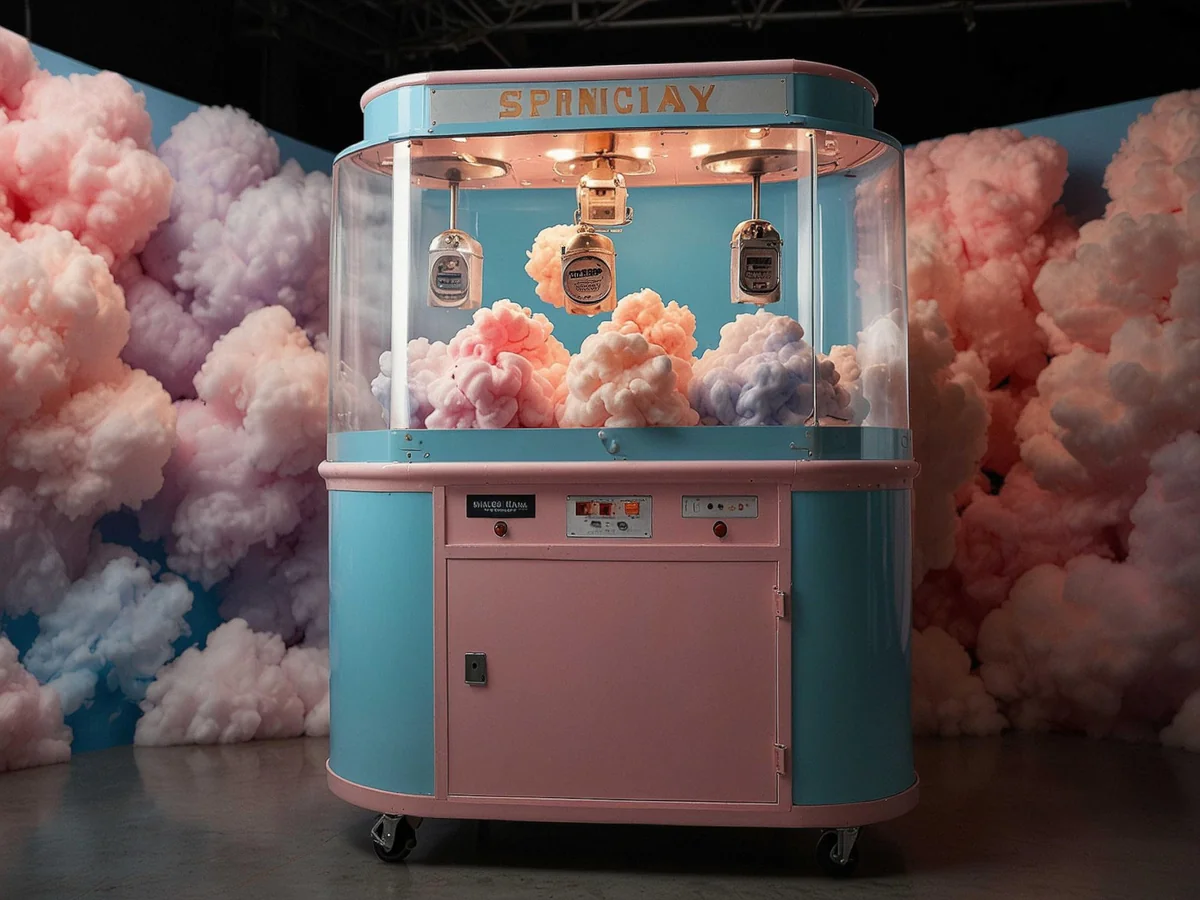
So what shifted? A few things at once, and they kind of collided.
The self-service retail wave that swept through North America a few years back is landing hard across Europe right now — Germany, the Netherlands, Spain, France. Operators who already run automated kiosks selling Genuine supplements or even Rapid Test Kit stations in high-footfall venues started looking for higher-margin additions. Cotton candy — freshly spun on demand, wildly visual, insanely cheap to produce — checks every box. Margins on a single serving can sit north of 80% once you’re past the machine cost. That’s not a typo.
And then there’s the content angle. I know it sounds weird, but hear me out. The same crowd obsessing over nd1000 filter settings for cinematic slow-motion reels? They love this stuff. A machine spinning pastel clouds of sugar in real time is basically a content machine that also sells snacks. Operators in Berlin and Amsterdam have told me foot traffic visibly clusters around these units — people stop, film, then buy. The machine markets itself.
The hardware side has also matured. Manufacturers like Caiyunjuan — based out of Guangzhou, been doing this since 2017 — have pushed the reliability bar up significantly. We’re not talking about glorified carnival equipment anymore. These are CE-certified, IoT-connected units with remote diagnostics. (Completely different animal from what was on the market even four years ago.) The fact that the same factory floor produces automated pizza kiosks and phone case printers tells you how seriously the category is being engineered.
Mixed-retail environments helped too. Walk through a newer retail corridor in Munich or Rotterdam and you’ll see automotive cnc machining showrooms sharing square footage with food kiosks — the lines between product categories in self-service retail are genuinely blurring. Cotton candy vending machine Europe deployments are slotting into that chaos perfectly.
Strange timing. But good timing.
The 5 Best Location Types for a Cotton Candy Vending Machine in Europe
OK so here’s the thing nobody tells you when they’re hyping up automated food kiosks — location is basically 90% of the outcome. I’ve watched genuinely well-built machines sit in the wrong spot and do almost nothing. Seen it happen with popcorn kiosks, protein blenders, you name it. A cotton candy vending machine Europe deployment lives or dies on foot traffic quality, not just quantity.

So let me give you the five location types that actually move product.
- Shopping centres and retail corridors — Specifically the high-dwell zones near food courts or anchor stores. Families slow down here. Kids see the machine. Done. Rotterdam’s newer mixed-retail corridors — the kind where an automotive cnc machining showroom might sit next to a bubble tea stand — are genuinely ideal for this.
- Amusement parks and indoor play centres — Honestly the most obvious fit, and it works exactly as well as you’d expect. The margin per unit is strong because guests are already in “spend mode.” This is where Caiyunjuan machines tend to get their best throughput numbers in European deployments, from what I’ve seen reported.
- Train stations and transit hubs — Counterintuitive, maybe. But European rail stations get massive weekend leisure traffic — not just commuters. Families, school groups, day-trippers. A cotton candy vending machine Europe operator I spoke to had a unit in a mid-sized German station pulling solid weekend numbers.
- Cinemas and entertainment complexes — Pre-show dwell time is perfect. People are already reaching for snacks. And unlike a Rapid Test Kit vending machine or Disposable Facial Towels dispenser, cotton candy is an impulse buy with zero hesitation.
- Seasonal markets and permanent fair venues — Think Christmas markets, Easter fairs, summer pop-up events. The category fits the aesthetic perfectly. No nd1000 filter needed to make the visuals pop — spinning sugar in a lit-up cabinet does the work on its own.
What these spots share: high emotional energy, families or young couples, and people who aren’t in a hurry to leave. Genuine supplements to foot traffic — not just raw numbers, but the right kind of footfall. That distinction matters more than most operators realize until they’ve already signed a lease somewhere mediocre.
H3: Shopping Malls and Retail Galleries
Honestly, malls are a weird beast. I walked through a mid-sized Westfield in Germany last spring and counted four different kiosks selling phone accessories — yet not a single one selling anything that actually smelled good. That’s a gap. A real, obvious, someone-is-sleeping-on-this gap.
Shopping malls across Europe have been quietly desperate for footfall-drivers that don’t require a salesperson hovering nearby. A cotton candy vending machine in Europe fits that slot almost embarrassingly well — it draws a crowd through scent and spectacle alone, the way no Rapid Test Kit dispenser or Disposable Facial Towels unit ever will. People stop. They film it. They buy one for their kid and then buy another for themselves. (The adult market for cotton candy is genuinely underestimated — I cannot stress this enough.)
Placement within the mall matters more than the mall itself. Dead-end corridors near fire exits? Hard pass. But position a machine near the food court entrance, or at the junction between the main atrium and the cinema wing — that’s where dwell time spikes and wallets loosen. The machine becomes part of the environment, not an interruption to it.
Retail galleries — those covered, pedestrianized shopping streets you find in cities like Bologna, Brussels, and Lyon — are an even softer sell. The aesthetic is already halfway there. Warm lighting, slow foot traffic, people browsing without a destination. A spinning sugar machine in that context doesn’t need an nd1000 filter on the promo video to look cinematic. It just does.
Operators sourcing machines for these environments have been gravitating toward manufacturers like Caiyunjuan, whose robotic cotton candy units are built for exactly this kind of semi-permanent indoor deployment — compact enough for gallery corridors, reliable enough to run without daily babysitting. The engineering precision in those cabinets is closer to automotive cnc machining tolerances than most people expect from a snack machine. Which sounds like marketing speak, but when you’re running a unit unattended in a mall for 10 hours a day, that build quality is genuinely what separates profitable from painful.
Genuine supplements to a mall’s existing F&B mix. Not replacements. That’s the pitch — and it’s an easy one.
Conclusion
The cotton candy vending machine Europe market isn’t saturated yet — and that window won’t stay open forever. If you’re sitting on a high-footfall indoor space and wondering whether the ROI math works, it does, provided the machine is built properly and placed where dwell time is already high.
Build quality is everything. A cheap cabinet that jams on a humid Saturday afternoon in a Brussels shopping centre will cost you more in lost trust than it ever saved upfront.
Find the right hardware, place it somewhere people are already lingering, and let the spectacle do the selling. Spinning sugar is its own advertisement — you genuinely don’t need to do much else.
Frequently Asked Questions
Q: How much does a cotton candy vending machine cost in Europe?
A: You’re typically looking at anywhere from €8,000 to €20,000+ depending on the spec — robotic arm models with custom colour mixing sit at the higher end, while simpler single-flavour units come in cheaper. Import duties and local compliance testing can add another 10–15% on top of the sticker price, so factor that in before you get excited about a “low” factory quote.
Q: Is a cotton candy vending machine worth it for a European shopping mall?
A: Honestly, if you’ve got a spot near an escalator or a kids’ play zone, the numbers are hard to argue with — cotton candy has an absurdly low cost-per-serve (often under €0.30 in ingredients) against a retail price of €3–€6. The visual theatre of the machine spinning sugar does most of the marketing for you. The risk isn’t the concept; it’s placing a cheap, unreliable unit somewhere that gets 10,000 footfalls a weekend.
Q: What certifications do I need for a cotton candy vending machine in Europe?
A: CE marking is non-negotiable — it’s the baseline for any electrical food machine sold or operated within the EU and UK (post-Brexit, UKCA applies separately). Machines that contact food directly should also meet relevant food-safety standards, and some operators in Germany and the Netherlands have flagged additional local hygiene inspections. Always ask your supplier for the full certification paperwork before the machine ships, not after.
Q: How long does a cotton candy vending machine take to make one serving?
A: Most modern robotic cotton candy vending machines — including models from manufacturers like Caiyunjuan — produce a full serving in roughly 60 to 90 seconds. That’s fast enough to avoid a frustrating queue but slow enough that the spinning process draws a crowd, which is actually part of the appeal in a busy mall corridor.
Q: Where are the best locations to place a cotton candy vending machine in Europe?
A: High-dwell, family-heavy spots are your sweet spot — indoor theme parks, shopping centre food courts, cinema lobbies, and airport terminals have all seen strong performance. What you want to avoid is anywhere with low ceiling height or poor ventilation; spun sugar is lightweight and the scent travels, which is usually a feature, not a bug, but building management sometimes disagrees.
Q: Can I import a cotton candy vending machine from China to Europe directly?
A: You can, and plenty of operators do — but go in with your eyes open. You’ll need to verify CE compliance independently if the manufacturer isn’t already certified, handle customs classification correctly (HS codes matter here), and arrange local service support because a machine down on a Saturday afternoon isn’t something a factory in Guangzhou can fix remotely. Working with a supplier that already has an established EU export track record cuts a lot of that friction.
Q: How often does a cotton candy vending machine need to be restocked or maintained?
A: Sugar refills depend entirely on volume — a busy weekend location might need restocking every 2–3 days, while a quieter weekday spot could run a week on one fill. Mechanically, the spinning head and heating element are the components to watch; most quality machines have remote diagnostics now, so you’re not flying blind between site visits.
Q: Why is the cotton candy vending machine Europe market growing right now?
A: A few things converged at once: post-pandemic foot traffic came back to malls stronger than expected, experiential retail became the dominant strategy for venue managers looking to differentiate, and the machines themselves got genuinely good — reliable enough to run semi-unattended. The “shareable moment” factor (people film these things constantly) means every sale is also free social content, which is something a static snack kiosk just can’t compete with.